Using SRE Tooling to Cross the Watzmann Ridge
I’ve been going into the mountains regularly for a few years now, and ever since I learned about the Watzmann, it had been a dream of mine to do the Watzmannüberschreitung aka Watzmann crossing.
The tour is on the longer side of day tours: roughly 25 km and 2,250 meters of elevation gain (in both directions combined), with an official recommended walking time of 14 hours alone. Along the ridge, you cross three separate peaks - Hocheck (2,651 m), Mittelspitze (middle peak, 2,713 m), and finally Südspitze (southern peak, 2,712 m) - in a thoroughly exposed manner, with steep views down into two separate valleys, one including the Königssee in all its glory.
The tour is mostly unsecured, with steel cables in maybe ten places to make things a bit safer. It is not a via ferrata, and a via ferrata set offers very little protection here. While the ridge itself has its most dangerous sections roped up, the descent from the Südspitze is a whole different challenge: for the first 1,350 meters, this seemingly never-ending descent demands full concentration at all times - it’s 100% fall-hazard terrain, and slipping is not allowed under any circumstances.
Since I was about to undertake this tour a) alone, all by myself, and b) for the first time, I thought it would be a good idea to defuse some of the difficulty by adding a night at the Watzmannhaus (1,913 m), just before the Hocheck. This is recommended unless your condition is absolute top-tier or you know the tour already.
Obtaining a Reservation
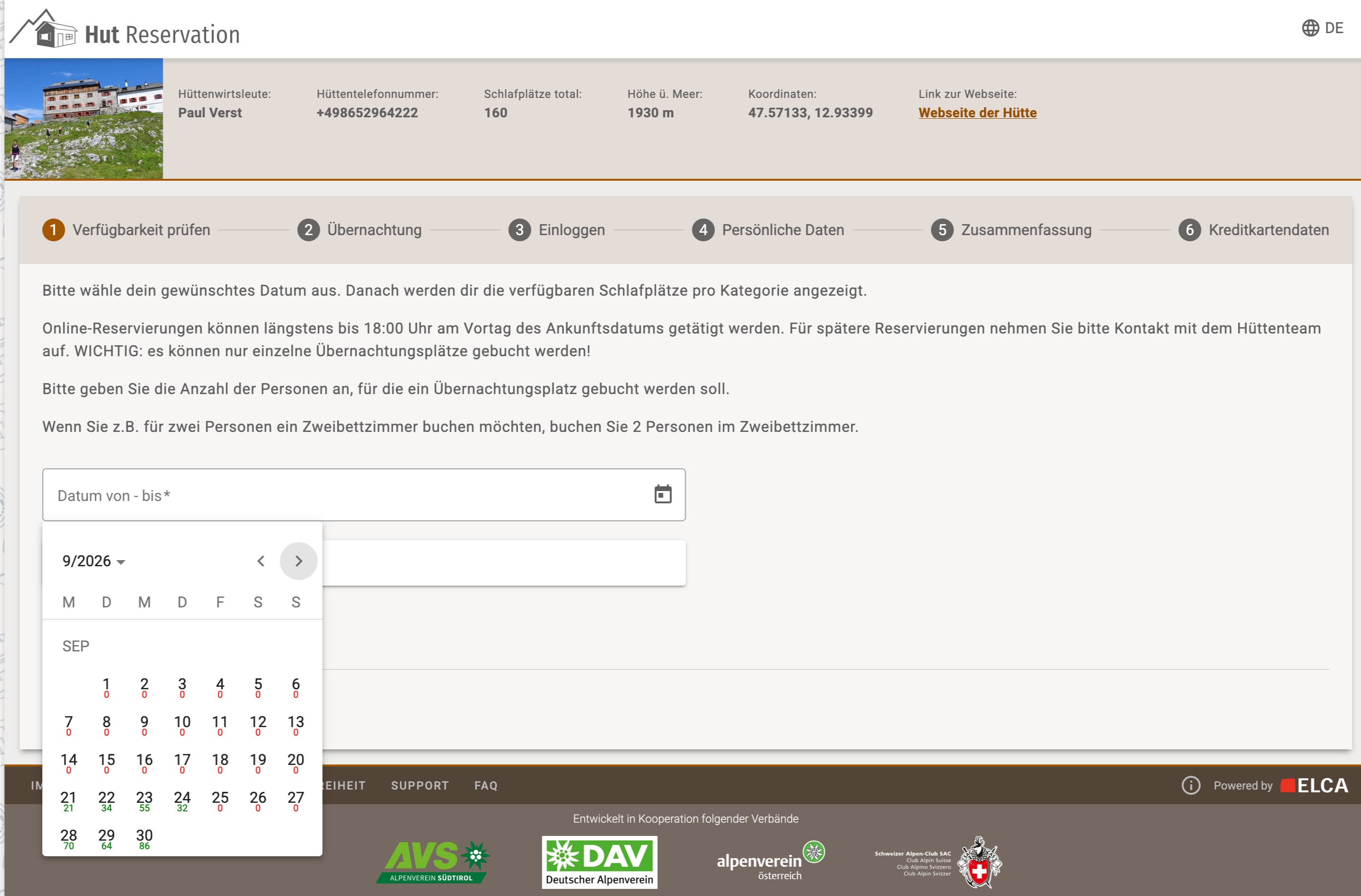
And now to the ugly part: obtaining a short-term reservation for that particular hut is not easy to come by spontaneously, as can be seen in the screenshot on the left. For September, nearly the whole month is already booked out - by mid-August! When I planned the tour, I had a reservation for a few days later that I’d made months ago, into the blind, but the weather for those days didn’t look good once the date came by.
So I could either risk running the ridge with wet rock on my first attempt (100% not recommended, given the exposure - also someone died in similar conditions in 2024), or try to snatch a reservation a few days earlier, when the weather is reported to be stable. Hut Reservation, the site used to book a spot at the Watzmannhaus, has something like a waitlist feature - but for that particular hut, it isn’t enabled, so it can’t be used. That means one would have to dedicate precious time to checking the site daily, hoping someone cancels a spot short-term that no one else snatches up immediately, since it’s a popular hut.
This brings us to a really big problem in the Alps over the last few years: mountains are becoming more popular, loads of people want to do these cool tours, and the huts acting as a base have only limited bed availability and need to plan their capacity carefully. To work around this, a reservation system has been created - which now means having to use a crystal ball and guess potential dates in the summer for a tour months in advance, just to avoid a fully booked hut. This pain scales up exponentially the more people and huts are involved in a tour. As the date approaches, we all have to pray the weather holds, since re-booking is rarely an option.
Last year, I attempted the same tour with two friends at the beginning of September, and we got the pattern: sun; rain; sun. The rain on the day we ascended to the Watzmannhaus turned into 10–20 cm of fresh snow and ice above 2,200 meters of elevation. Needless to say, we made it to the Hocheck but didn’t advance on the ridge, as conditions were too dangerous for us at the time.

In the end, people just want to do their tours, so they start making multiple reservations to have more flexibility for short-term planning - this in turn, reduces capacity for others short-term and causes even more uncertainty when planning a tour. The DAV itself reports cancellation rates of up to 40% for 2026 so far. Some of them very last-minute, with fees of only €5–10 then billed. I believe this situation will only get worse in the future, and there’s no good solution in sight currently for all the parties involved. This means it will remain a major annoyance for both guests and huts.
Let’s Monitor the Hut Reservations
As annoying as this is, here’s a chance to deploy tooling normally used in site-reliability engineering to find the time window where a reservation is possible for me. May this allow me to still cross the Watzmann ridge this year!
My timeframe basically looked as following: 3rd August 2026 would be the perfect day to arrive at the hut, as 4th August 2026 had perfect weather conditions. I found this out on 30th July, so I was on a tight schedule - what worked in my favor was that 1st August was the last day to cancel for free, so maybe a spot would open up.
Hut reservation provides an API that you can inspect by using the browser network tab; this quickly reveals a POST endpoint named /api/v1/reservation/checkAvailability/<id> where id corresponds to the hut you’re trying to book. It accepts a JSON payload generated by the browser client that looks the following:
 1{
 2  "arrivalDate": "03.08.2026",
 3  "departureDate": "04.08.2026",
 4  "isWaitingListAccepted": false,
 5  "nextPossibleReservations": false,
 6  "numberOfPeople": 0,
 7  "peoplePerCategory": [
 8    ...
 9  ],
10  "reservationPublicId": ""
11}
So, in order to still have a chance of booking a spot, I decided to use Checkly to set up a quick-and-dirty site monitor with email alerts. There are other tools available for this task, such as Uptime Kuma - a self-hostable, standalone OSS alternative - or Blackbox Exporter, which can seamlessly integrate into existing Prometheus, Mimir, or Thanos monitoring setups.
I use both Uptime Kuma and Blackbox Exporter in my cloud-native homelab (which also hosts this site - I’ll write a post about it in the future) and decided not to mix up my infrastructure monitoring with my hiking-hut reservation needs =D
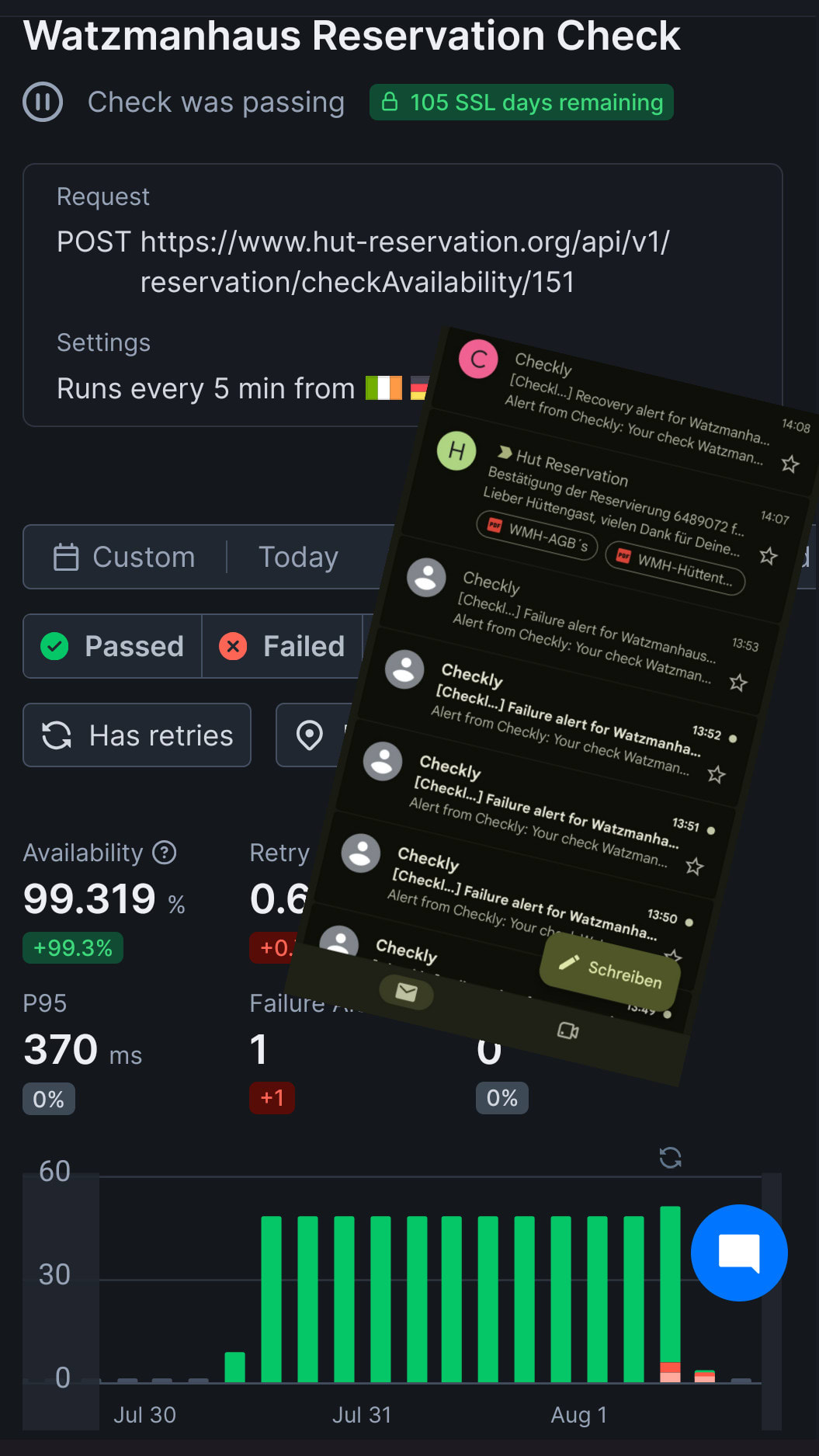
On a very positive note: it took me three minutes from clicking the Google SSO button to having the check set up with Checkly. They provide an AI agent with access to tools to set up and test the monitor for you. This meant I only had to prompt my requirements, as well as paste sample input and output JSON, to receive a fully configured monitor a minute later. The agent inverted the alerting condition, which I fixed by hand in 15 seconds.
We end up with a POST request containing a JSON payload with the date we wish to be informed for that fails if the 200 OK response of the endpoint’s response model at JSON-path $.availabilityPerDayDTOs[0].freePlaces evaluates to non-zero (which can only happen if someone cancels their reservation and new spots are available). This was polled every five minutes - often enough to realistically catch a freed-up spot, rare enough not to strain their API. The monitor only ever sent me an email; the booking itself stayed a human clicking a button.
Using this monitor, it took only around 48 hours until I got the good news pushed onto my phone on August 1st at 13:48 - enabling me to book my reservation at 14:07. Against the odds of a 99.319% availability of the endpoint answering under the conditions of me staying home, we finally observed the incident that saved my trip! I believe this is the first time I was ever excited about a monitoring alert going off =D
This now begs the question: how bad is it going to be in the coming years, when I already had to resort to measures like this just to do my short-term trip? Will we all have vibe-coded bots battling each other over the last spots of a hut? Will we have bots booking out entire hut-to-hut routes in the future, or maintaining high availability of trips hedged against bad weather by auto-reserving and auto-canceling? I hope we’ll have a far less dystopian future ahead, and that the huts find a solution that matches everyone’s needs much better - without people resorting to botting just to go into the mountains.
Enjoying the Watzmann Ridge
On the day I arrived, the hut had declared a water shortage, so it was only possible to wash between 8–10 pm - totally fine, since most people are only there for one night anyway. This is a known issue and will only get worse over time - with ongoing climate change, plenty of huts will struggle to secure enough water.
In my opinion, it’s completely fine to lower the level of comfort at huts in the future. No showers, fewer food options, more reuse of plates, etc., would all be fine, as long as the basic function of the hut - i.e., providing shelter - can still be provided. They don’t have to compete with four-star hotels.
The food at the hut was superb again. It’s so nice to eat a good Kaiserschmarrn and Spaghetti Bolognese after the ascent. I decided to wake up with a group of three women who were in my dorm at 4 am, as they’d planned to start by 4:30 am. I copied their start time since that sounded like a good idea to avoid the masses. Having breakfast together while watching the first lights of people going up the Hocheck under the stars was pure magic. And it was already warm enough to wear a t-shirt and hiking shorts.
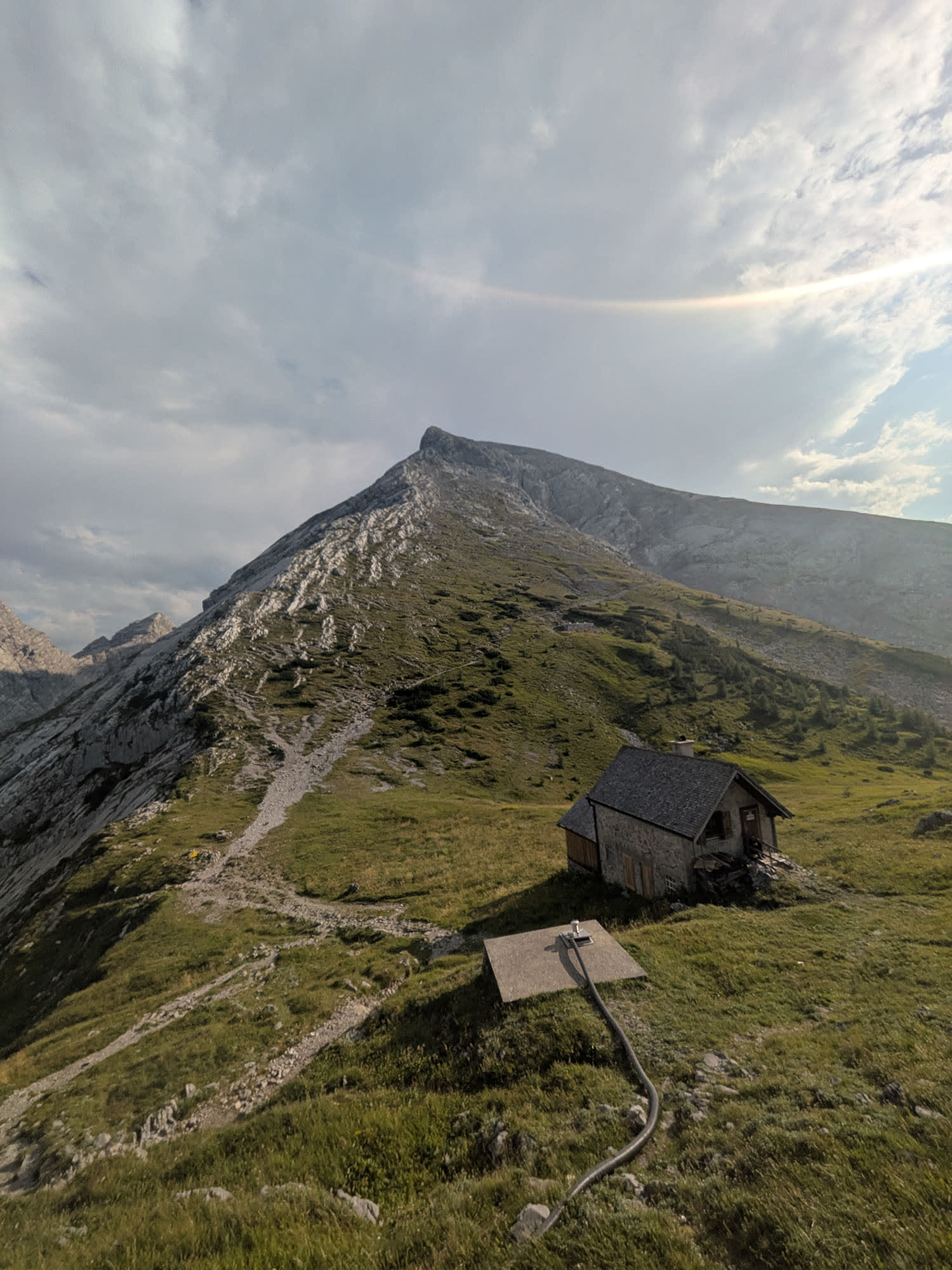
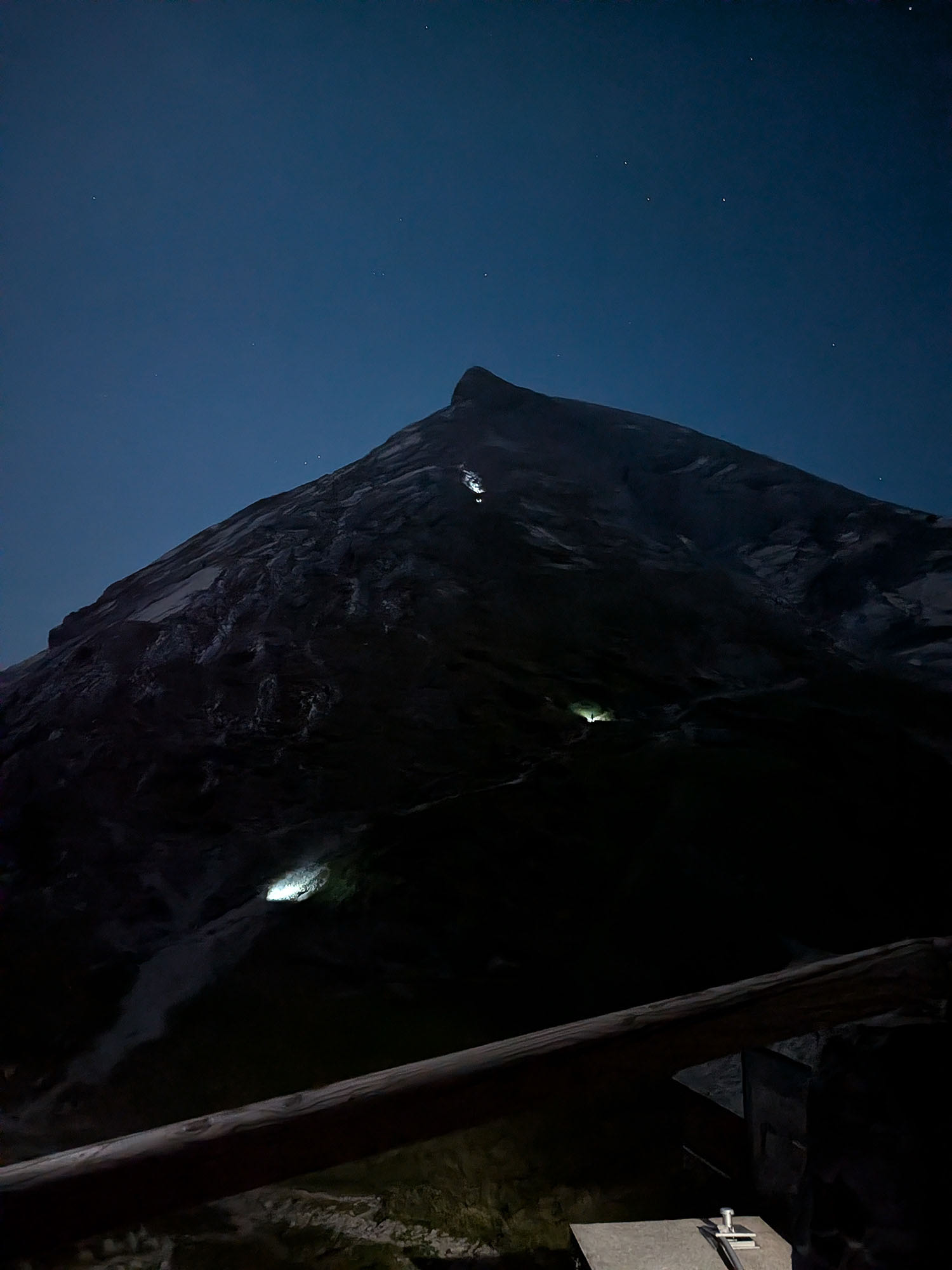
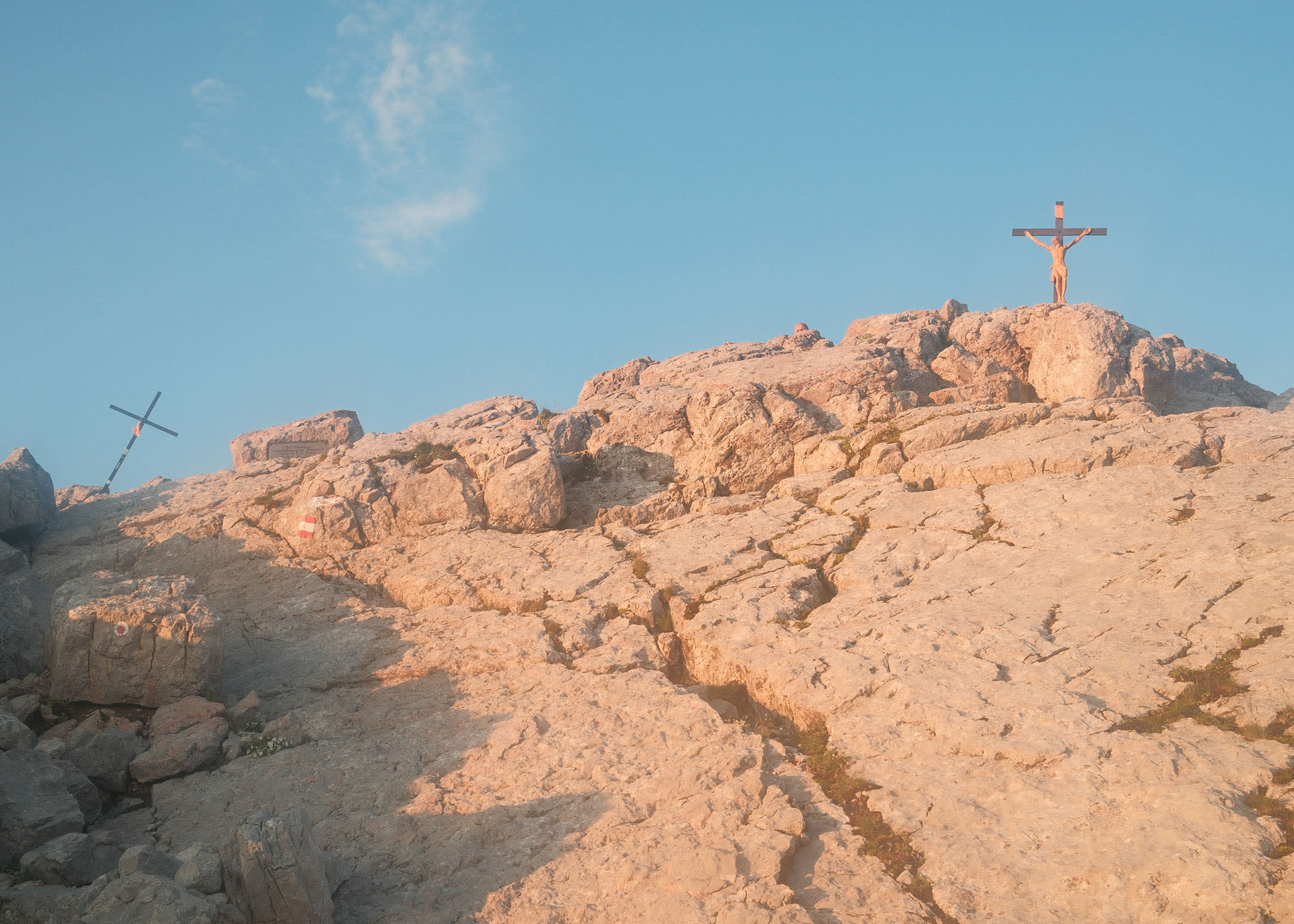
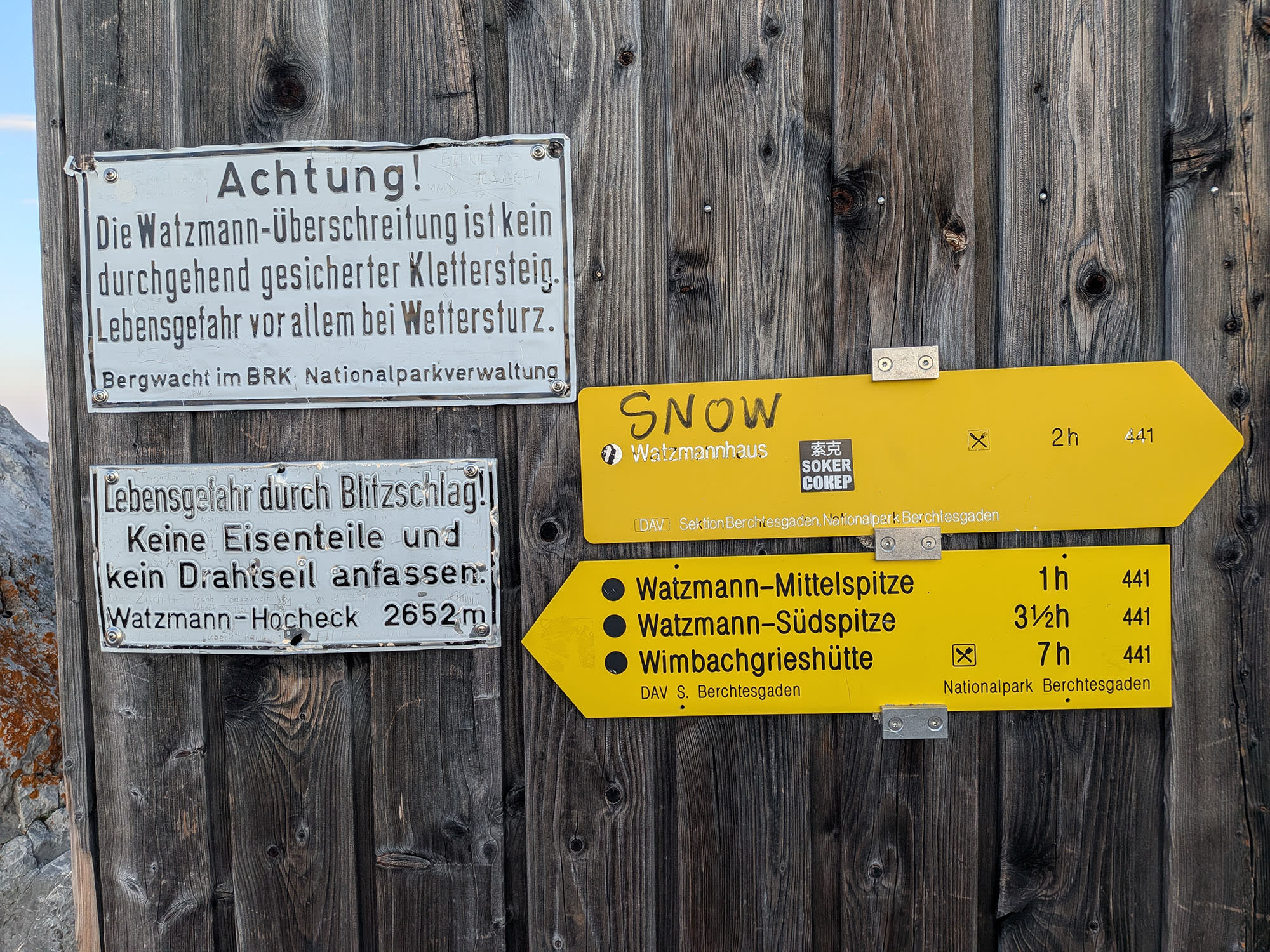
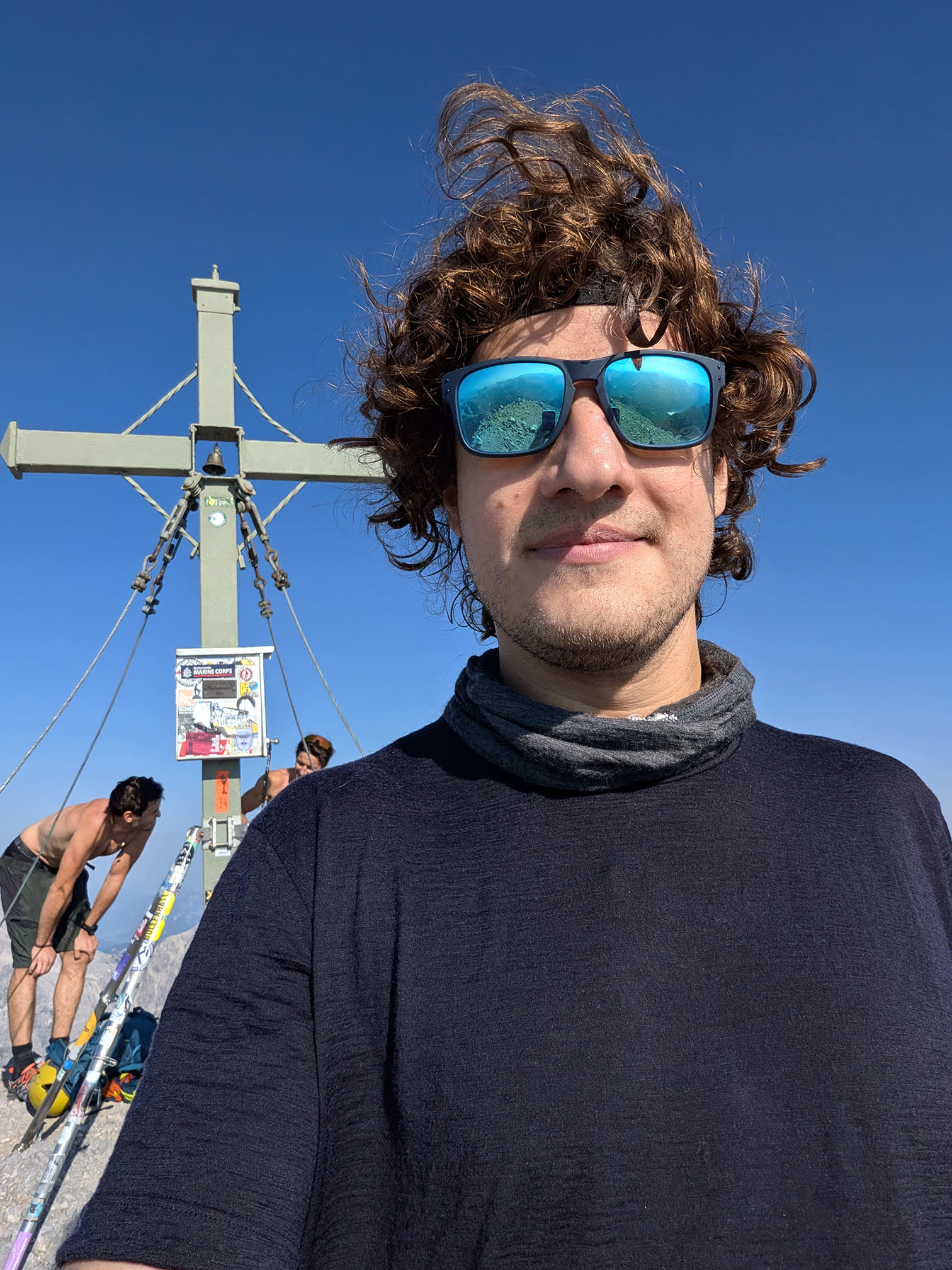
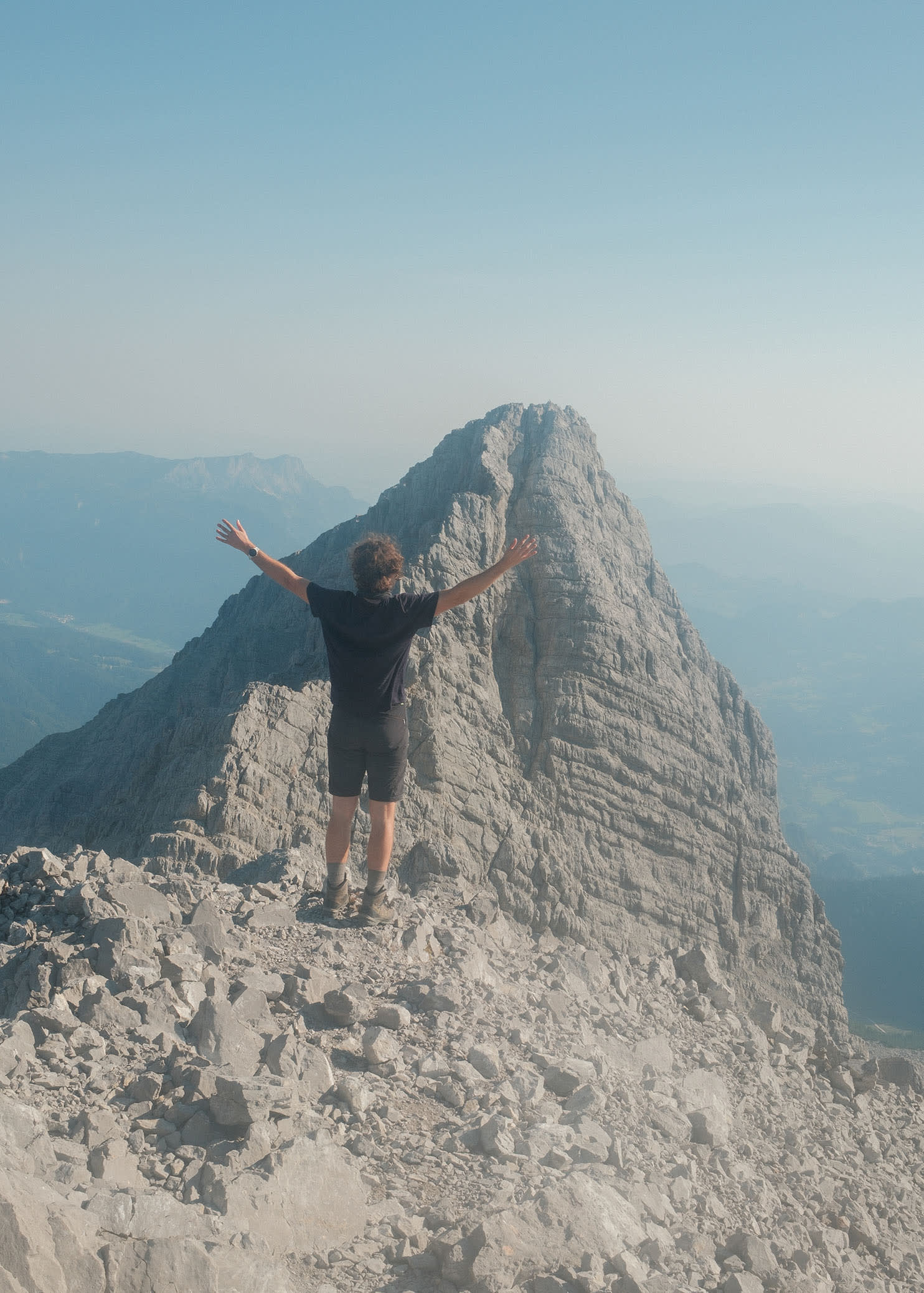
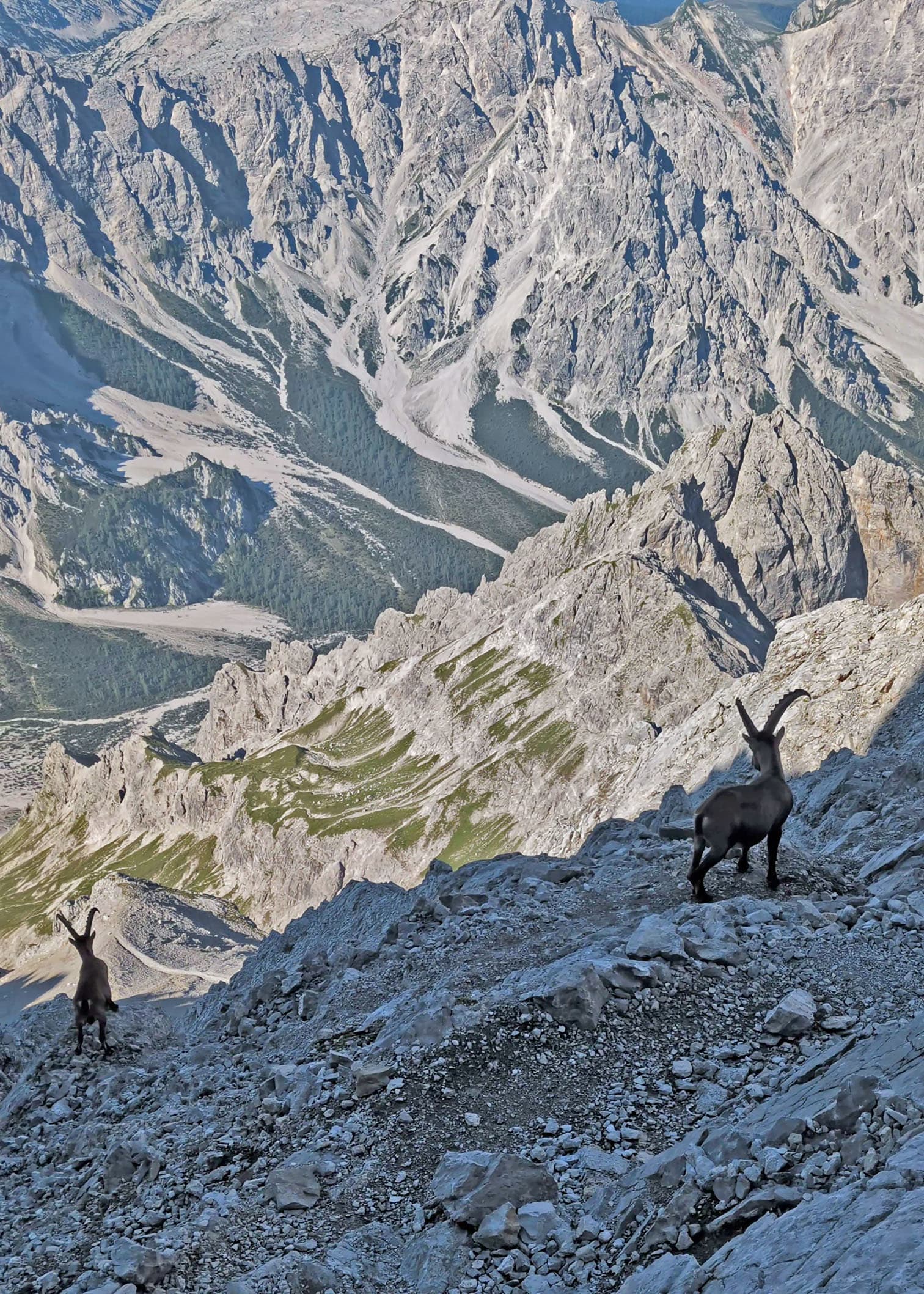
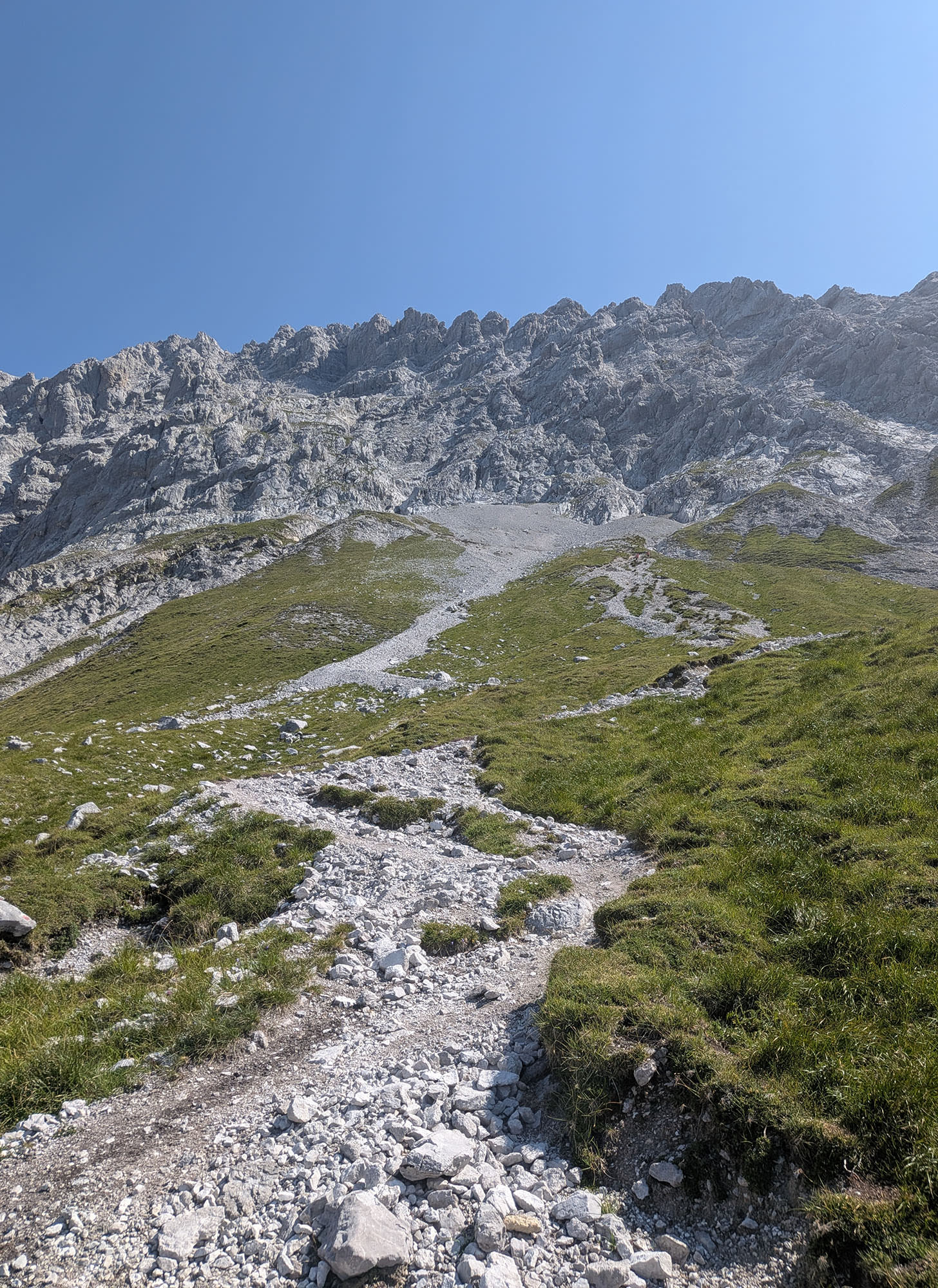
I then started at 4:30, made my way up, passed one group, and arrived at the Hocheck around 6:15 am. There was one guy already there who’d started at 1 am and didn’t want to proceed. I had a short talk with him, took my first break, and then continued onto the ridge. I arrived at the Mittelspitze max. half an hour later and reached the Südspitze at 8:35 am - that was quick! I didn’t meet anyone else on the ridge besides two parties I took a short break with at the Mittelspitze. I had it all to myself and even got to enjoy ten minutes on the Südspitze until two guys emerged from the Watzmann Ostwand, a notorious 2,000 m wall that’s one of the ultimate challenges of the Eastern Alps, as it’s quite hard to navigate.
Time after time, I met up with the two parties again as they arrived, and I started my descent fairly soon, since the sun was really starting to heat everything up on this cloudless day. That turned out to be a good decision! The way down was really as bad as always described - it never seemed to end, and I had to maintain constant concentration for the 1,350 meters of descent down to the Wimbachgries. The descent never got any easier, and even though the landscape changed, there was little relief; it was just steep and long, never-ending, and with every step you had to be careful not to slip or stumble.
I managed to complete that section by 11:55 am and ran out of water (I carried 3L with me) just five minutes before the Wimbachgrießhütte. I took a short break there to refill my water and drink some sugary drinks before arriving back at the parking spot at 14:20, after roughly 7:54h of walking time - meaning I took roughly 10h from the Watzmannhaus back to the Wimbachgrießbrücke.
The tour was just as described; I loved the ridge but underestimated the descent by maybe 30%. It was much more annoying than expected =D I did everything correctly by starting so early and avoiding the masses. Next time, I’ll do it without the hut, in one go!